
What If Your Brand's Biggest Problem Isn't the Message…It’s the Feeling?

Most brands obsess over what they’re saying.
Positioning statements. Taglines. Differentiators. Category of one.
All of that matters. But it is only half the job.
The other half is how a brand makes people feel every time someone sees an ad, lands on a website, opens an email, or scrolls past a post. That emotional imprint is usually accidental. It should be intentional.
If we want our marketing to actually move people, we need to treat emotion as a strategic input, not a side effect.
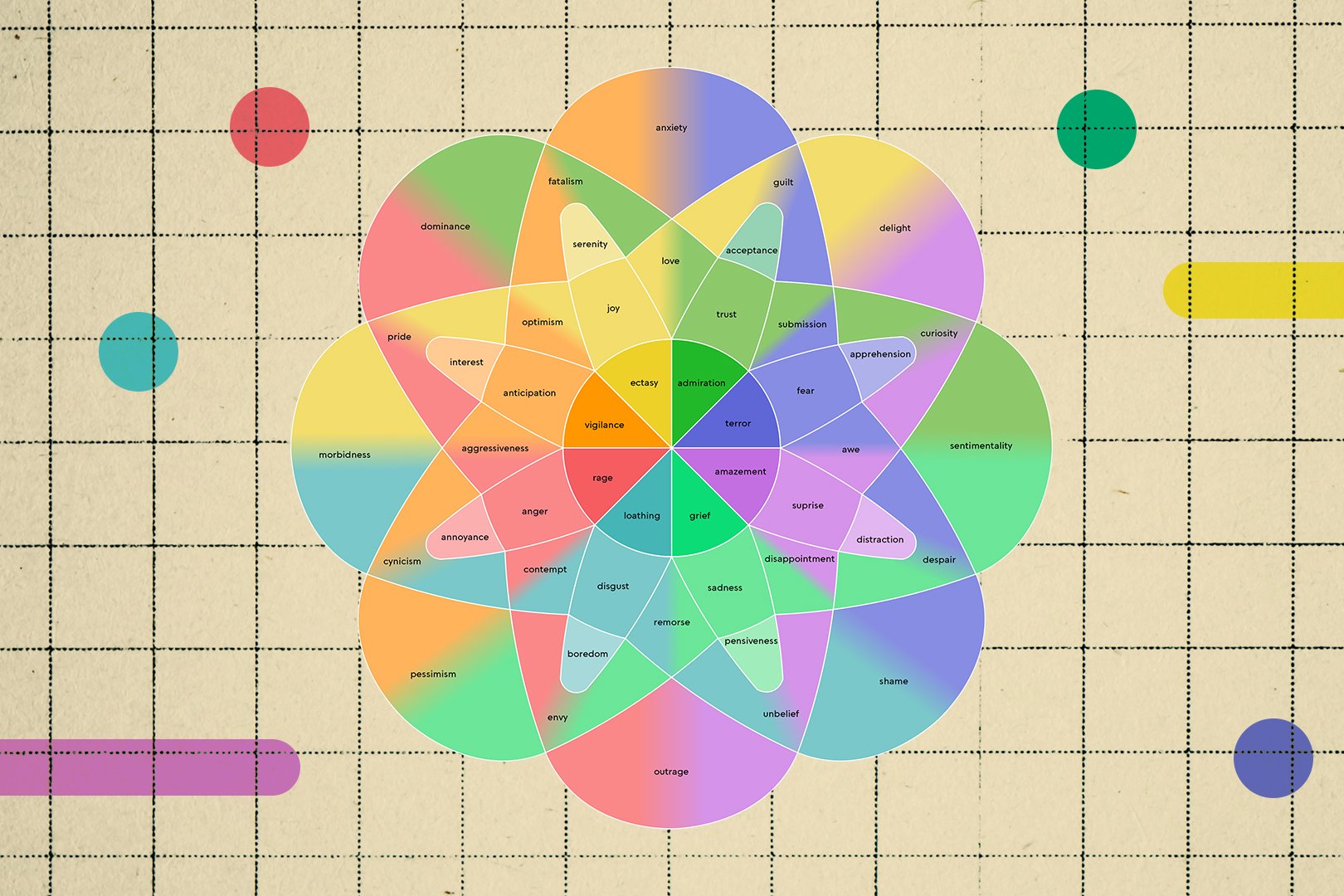
The Wheel We Should Be Using, But Probably Aren’t
In the 1980s, psychologist Robert Plutchik introduced a simple but powerful idea: most of what we feel can be traced back to eight core emotions.
Joy
Trust
Fear
Surprise
Sadness
Disgust
Anger
Anticipation
Like primary colors, these emotions combine to create more complex feelings. In Plutchik’s framework, those combinations are called “dyads.”
A few examples that matter in marketing:
Joy + Trust = Love
Joy + Anticipation = Optimism
Surprise + Sadness = Disappointment
Anger + Disgust = Contempt
We are never just “doing a social campaign” or “sending an email blast.” We are always choosing (or ignoring) a specific emotional outcome.

Complex Emotions Drive Action
Simple emotions are a start. Someone might feel a little joy when they see a nice photo, or a little anticipation before a sale.
Complex emotions go further. They feel richer, more human, and more memorable. That is where we start to see real activation:
Delight instead of basic satisfaction
Curiosity instead of vague interest
Sentimentality instead of generic “warmth”
Pride instead of simple approval
These are combinations of those primary emotions, and they are what people talk about, share, and come back for.
We do not need to weaponize outrage or lean on destructive emotions to get results. For most brands, the real opportunity is to design constructive complex emotions on purpose.
If we buy this idea, the next step is consistency.
Every touchpoint should be pulling in the same emotional direction:
Social posts
Billboards and print
TV or video pre-roll
Website pages and landing pages
Email sequences and automations
When someone encounters a brand in any of these places, the emotional “temperature” should feel familiar. The words, visuals, pacing, and offers all stack together to reinforce the same core feelings.
Run An “Emotional Depth Audit” On Your Marketing
If we want to put this into practice, here is a simple audit a team can run:
List the current touchpoints. Website, emails, social, ads, print, events.
Name the simple emotions being projected today. Be honest—are we mostly creating mild joy, low-stakes anticipation, or even unintentional anxiety?
Decide which complex emotions the brand should own. For example: delight + curiosity, or pride + trust.
Map gaps. Where does current content fail to create those complex emotions? Where does it accidentally create disappointment or indifference?
Rewrite for emotional outcomes. Instead of asking “What do we need to say?” ask “What do we want people to feel after this?” Then adjust copy, visuals, and offers until the answer is clear.
When we start treating complex emotions as a measurable outcome of our marketing—not just a happy accident—we stop guessing. We build a brand people actually feel something about. And that is when our strategy finally has a chance to stick.
If you run this kind of audit on your own brand, you may be surprised by the gap between the emotions you think you are creating and the ones your audience is actually experiencing.
